
Why One-at-a-Time Content Creation Fails
Creating one social media post at a time is the most expensive way to produce content that has ever been invented, and almost everyone does it. You sit down in the morning, open a blank composer, stare at it, try to think of something worth saying, write a rough version, second-guess it, rewrite the hook, find an image, fix the formatting, and finally publish. Then you do the same thing the next day. And the day after. Each session feels small, but the cumulative cost is enormous, because every single post forces you to pay the full mental startup tax from scratch.

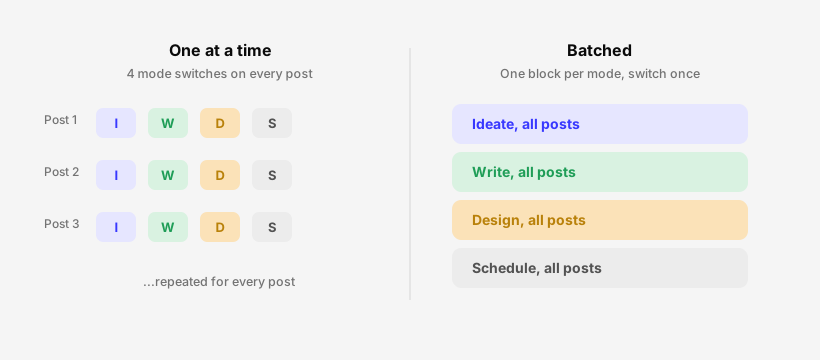
The reason this fails is not laziness or lack of discipline. It fails because of how the human brain actually works under repeated context switching. When you create content one piece at a time, you are constantly toggling between four completely different cognitive modes: the divergent, associative mode you need to come up with an idea; the linear, structured mode you need to write a clear argument; the visual, spatial mode you need to design an image; and the logistical, calendar mode you need to schedule and publish. Each of these modes uses different mental resources, and switching between them dozens of times a week leaves you exhausted, slow, and inconsistent.
Worse, one-at-a-time creation makes you fragile. If you have a busy week, content is the first thing to drop, because there is no buffer. A client emergency, a launch, a sick kid, and suddenly you have not posted in nine days. The audience you spent months building forgets you exist. Then you come back, feel guilty about the gap, post something apologetic, and the cycle of inconsistency continues. The platforms reward consistency above almost everything else, and one-at-a-time creation is structurally incapable of delivering it.
The alternative is batching: producing a large volume of content in a small number of focused, single-mode sessions, then scheduling it to publish automatically over the following weeks. You pay the startup cost once and amortize it across thirty pieces of content. You protect future-you from the days when life gets in the way. And you give the platforms exactly what they reward, which is a steady, reliable cadence of valuable posts. This guide lays out the full system: the science behind why it works, the exact afternoon workflow, the templates that make it fast, the mistakes that quietly sabotage it, and how to keep it running for months without burning out.
Key takeaway: Content creation fails one post at a time because every post forces a full context switch across four cognitive modes. Batching pays that switching cost once and spreads it across an entire month of output.
The Science of Batching: Why Your Brain Hates Switching
To understand why batching is not just a productivity trick but a genuine multiplier, you need to understand what context switching actually costs. When researchers study task switching, they consistently find a measurable penalty: every time you move from one type of task to another, there is a lag before your brain fully loads the rules, vocabulary, and goals of the new task. This lag is called the switch cost, and it is not trivial. Studies of knowledge work have estimated that frequent switching can reduce effective productive time substantially, and some workplace research suggests it can take many minutes to fully return to deep focus after an interruption.
Now apply that to content creation. Writing a LinkedIn post and designing an image for it are not the same task with a slightly different output. They live in different parts of your attention. Writing is verbal and sequential. Design is visual and holistic. Coming up with the idea in the first place is associative and unstructured. Scheduling is logistical and detail-oriented. When you create a single post end to end, you switch modes three or four times in fifteen minutes, and you pay the switch cost every single time. Multiply that across thirty posts created individually and you have paid the switch tax roughly a hundred times in a month.
Decision fatigue compounds the problem
Context switching is only half the story. The other half is decision fatigue. Every post created from scratch demands a cascade of micro-decisions: What should this be about? What is the angle? How do I open it? Is this hook strong enough? Does this image fit? What time should it go out? Which platforms? Each decision is small, but decision-making is a finite resource that depletes over the course of a day. By the time you have made a few dozen content decisions in isolation, the quality of your decisions degrades. You start choosing the safe, generic option because you no longer have the mental energy to find the better one. This is why posts created late in a tired day so often feel flat.
Batching attacks decision fatigue directly by collapsing many similar decisions into one. When you write fifteen post hooks in a single sitting, you are making one kind of decision repeatedly, which lets you build momentum and pattern-match rather than reasoning from zero each time. You get better at it as you go, not worse, because you are in a groove instead of restarting.
Flow state needs uninterrupted runway
The deepest reason batching works is flow. Flow is the state of complete absorption in a task where time distorts and output quality jumps. Flow requires a runway: a sustained, uninterrupted period of single-task focus long enough for your brain to fully load the task and lock in. One-at-a-time creation makes flow nearly impossible, because by the time you might enter flow on writing, you have switched to image creation and broken the spell. Batching gives each mode a long enough runway that flow can actually happen. Most people who batch report that the writing block, once they are twenty minutes in, becomes the most enjoyable and productive part of their week. That is flow doing the work.
The Batching Mindset: Separate the Modes, Never Mix Them
Before any workflow or tool matters, you have to adopt the core mental model that makes batching work. The principle is simple to state and surprisingly hard to follow: separate the modes and never mix them. Content creation is not one activity. It is four distinct activities that happen to produce a connected output. The four modes are:
- Ideate. Generating raw ideas, angles, and topics. This is divergent, playful, judgment-free thinking. The only goal is quantity of possibilities.
- Write. Turning chosen ideas into clear, structured copy. This is convergent, linear, craft-focused work.
- Design. Creating the visuals: images, graphics, thumbnails, carousels. This is spatial and aesthetic.
- Schedule. Loading everything into a calendar, choosing dates and times, assigning platforms, and queuing for publishing. This is logistical and detail-oriented.
When you do these four things in their own dedicated blocks, each block becomes faster and better, because you stay in one mode long enough to get good at it for that session. When you mix them, every post becomes a tiny, exhausting tour through all four modes. The entire batching system is just the disciplined application of this one rule. Everything else, the timers, the idea bank, the templates, exists to help you stay in one mode without slipping into another.
The hardest mode discipline to maintain is keeping ideation and writing separate from editing. When you write and edit at the same time, you produce one perfect sentence while your inner critic kills ten good ideas. Generate first, judge later. Always.
The Idea Bank: Never Start From a Blank Page
The single biggest reason batch sessions fail is that people walk into them with no raw material and try to invent a month of ideas under time pressure. That is not batching. That is just doing the hardest part of one-at-a-time creation, compressed into one painful afternoon. Real batching depends on an idea bank: a running, always-on backlog of content ideas that you feed continuously so that when the batch session arrives, you are developing ideas, not generating them from nothing.
Batching does not mean you only think about content during the batch. It means you separate idea capture from idea development. Idea capture is cheap, ambient, and ongoing. It happens during meetings, in the shower, while reading, mid-conversation, when a customer asks the same question for the third time. The bar for adding an idea to the bank is deliberately low: if it is interesting enough that it might become a post, it goes in. You are not committing to writing it. You are just refusing to let it evaporate.
How to build and maintain an idea bank
The mechanics matter less than the habit, but here is a structure that works. Keep one always-accessible capture surface: a note on your phone, a single document, a database, whatever you will actually open in fifteen seconds. Spend ten minutes a day, or even just ten minutes a week, adding raw ideas to it. Over two to three weeks you will accumulate far more than you need for a full month of content. Then organize the bank into rough buckets so the batch session has structure:
- Questions your audience actually asks. Every question a customer, prospect, or follower asks is a post. These are the highest-converting ideas because you know there is demand.
- Opinions and contrarian takes. Things you believe that your industry mostly gets wrong. These drive engagement and define your voice.
- Lessons and stories. Specific things that happened to you or your customers, with a takeaway. These build trust and feel human.
- Frameworks and how-tos. Repeatable processes you can teach. These are evergreen and highly shareable.
- Observations and trends. Patterns you are noticing. Some of these are time-sensitive, so flag them for sooner posting.
An idea that sat in the bank for a week and still seems interesting is almost always better content than an idea you forced into existence on the morning you needed it. The bank is doing quality control for you by giving good ideas time to prove themselves. This idea bank is also the engine behind a working content calendar for a solo founder: the calendar tells you what to publish and when, and the bank is where the raw material comes from.

The One-Afternoon Workflow: A Month of Content in Five Phases
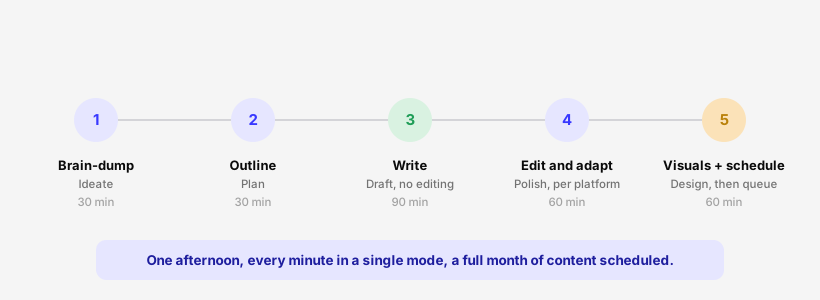
Here is the heart of the system. With a stocked idea bank, you can produce a full month of content, roughly twenty to thirty pieces, in a single focused afternoon. The afternoon is divided into five time-boxed phases, each corresponding to one cognitive mode. Time-boxing is essential: it forces you to keep moving, prevents perfectionism in early phases, and protects you from the bottomless pit of polishing a single post for an hour. Set a visible timer for each phase and respect it.
Phase 1: Brain-dump and select (30 minutes)
Open your idea bank. Do not write anything yet. Spend the first fifteen minutes adding any final ideas and scanning what you already have. Then spend the next fifteen minutes selecting and clustering. Pick the twenty-five to thirty ideas you will develop this session, and group related ones into series. Three related posts on the same theme become a mini-series, which is far easier to write together than three unrelated posts, and series perform well because they create anticipation. By the end of this phase you have a numbered list of the exact ideas you will write, with the strongest ones at the top in case you run short on time.
Phase 2: Outline and assign (30 minutes)
Still no full writing. For each selected idea, jot down a one-line angle and the core point in a few words. This is the skeleton. Decide which format each one will take: a short text post, a list, a story, a thread, a how-to. Assign each idea its primary platform and note which ones are worth adapting across networks. This phase exists so that when you hit the writing block, you never have to stop and think about what a post is supposed to do. The decisions are already made. You are just filling in the words. Spending thirty minutes here can save you ninety in the next phase.
Phase 3: Write all the copy (90 minutes, with a break)
This is the core block and it deserves the most protected, uninterrupted time you have. Set a timer for forty-five minutes. Go down your outlined list and write a first draft of each post. Do not edit. Do not polish. Do not find images. Do not check your phone. Write the draft, mark it done, move to the next. Aim for one draft every five to seven minutes. The goal is volume and momentum, not perfection. When the inner critic shows up, ignore it. You are generating, not judging.
Take a fifteen-minute break, fully away from the screen, then run a second forty-five-minute block to finish the list and circle back to any post that stalled. By the end of this phase you will have twenty to thirty rough drafts. Some will be great. Some will be discarded. Most will be solid material that needs editing. That is exactly the right outcome. For platform-specific craft inside this block, lean on proven structures: the perfect LinkedIn post formula gives you a reliable skeleton for LinkedIn drafts, and a clear Twitter thread strategy makes thread drafting fast and repeatable.
Phase 4: Edit, polish, and adapt (60 minutes)
Now, and only now, do you switch into the editing mode. Go through every draft and sharpen it. Strengthen weak hooks. Cut filler. Break up dense paragraphs. Check the length against each platform. Add links and calls to action. This is also where you handle cross-platform adaptation: take a strong post and reshape it for each network it belongs on. The principles of doing this well, what to keep, what to cut, what to restructure, are covered in depth in our guide to adapting content for each platform, and the broader leverage play of turning one idea into many posts is covered in how to repurpose one post across five platforms.
Be ruthless here. A month of mediocre posts you feel obligated to publish because you batch-created them is worse than three weeks of strong ones. Anything that does not clear the quality bar goes back into the idea bank for next time, not into the queue. The target is a bank of fifteen to twenty genuinely strong, ready-to-publish pieces, not thirty forgettable ones.
Phase 5: Create visuals and schedule everything (60 minutes)
Stay in batch discipline to the end. First, create all the images you need in one sitting, while you are in visual mode. With a defined style guide and a prompt template, AI image generation takes a few minutes per image, and generating them all together is dramatically faster than switching in and out of image mode thirty times. Then load the entire month into your scheduler at once: assign dates, choose optimal times, set platforms, and queue everything to publish automatically. When this phase ends, your month is done. You will not need to think about daily posting again until the next batch. This final phase is the payoff, and we will return to exactly how to make it effortless in the scheduling section below.
Load a Month of Content Into One Calendar
Batch once, then let Postprism auto-publish your whole month to all 9 networks from a single calendar. Start your 7-day free trial.

Templates and Repeatable Formats: The Speed Multiplier
The fastest batchers are not faster writers. They are people who almost never start from a blank structure. They have a personal library of templates, hooks, and post skeletons that turn writing into filling in the blanks. When your outline already says this is a problem-agitate-solution post and you have written forty of those before, the draft writes itself. Templates are how you hit a draft every five minutes without your output feeling like a robot wrote it.
Hook templates
The opening line determines whether anyone reads the rest, so it is worth having a stable of reliable hook patterns to pull from:
- The contrarian: Everyone tells you to do X. They are wrong, and here is why.
- The result: A specific, surprising outcome with a number, followed by how it happened.
- The mistake: The expensive error you made so the reader does not have to.
- The question: A sharp question your audience is quietly asking themselves.
- The list promise: The number of things you are about to deliver, stated up front.
Post skeletons and series
Below the hook, a handful of reusable post structures cover the vast majority of what you will ever write:
- Problem to solution: Name the pain, agitate it, then resolve it. Reliable for educational content.
- Story to lesson: A specific moment, then the takeaway. Reliable for trust and voice.
- Listicle: A numbered set of tactics or insights. Reliable for saves and shares.
- Framework reveal: Introduce a named, repeatable process. Reliable for authority.
- Myth versus reality: State a common belief, then dismantle it. Reliable for engagement.
Series are the ultimate batching accelerant. Instead of thirty unrelated posts, build five themes and write five or six posts inside each. Within a theme, you stay in deep context, the posts cross-reference each other, and your audience starts looking forward to the next installment. A week of LinkedIn posts that all explore one big idea from different angles is far easier to write in a batch than seven disconnected posts, and it lands harder.
Three Ways to Batch: By Platform, By Theme, By Format
There is no single correct way to organize a batch session. The right structure depends on how many platforms you run, how cohesive your message is, and how your brain works. The three dominant approaches are batching by platform, by theme, and by format. Most experienced creators blend them, but it helps to understand each one cleanly.
| Approach | How it works | Best for | Watch out for |
|---|---|---|---|
| By platform | Write all LinkedIn posts, then all X posts, then all Instagram captions, in separate blocks. | Multi-platform creators who need each network in its native voice and format. | Repeating the same idea differently can feel repetitive; risk of treating platforms as silos rather than one strategy. |
| By theme | Pick a theme, write every post about it across all platforms, then move to the next theme. | Building authority on specific topics; running content series; message cohesion. | Can produce uneven platform coverage if one theme suits one network better than others. |
| By format | Write all your short text posts, then all threads, then all carousels, then all video scripts. | Staying in one craft mode; people who find format-switching draining. | Requires a clear plan up front so you know how many of each format you need. |
A practical hybrid that works for most solo operators and small teams: organize the session by theme at the top level (it keeps your message coherent and feeds series), then by format within each theme (write all the short posts for the theme, then the thread, then the carousel). Save platform adaptation for the editing phase, where you take the strong core post and reshape it per network. This sequence keeps you in the longest possible single-mode runs while still producing a properly cross-platform output. The deeper strategic logic of running one coherent message across many networks is laid out in our cross-platform social media strategy guide.
Tools for Batching, and Where AI Actually Helps
You do not need an expensive stack to batch. You need one tool in each of a few categories, and the discipline to use each one only in its mode. Here is how to think about the toolkit.
- Capture: Anything you will open instantly. A phone note, a single doc, a lightweight database. The only requirement is zero friction.
- Writing: A distraction-free writing surface for the drafting block. Plain is good. The fewer buttons, the better the flow.
- Visuals: A consistent image generation or design workflow with a saved style so output is on-brand without re-deciding every time.
- Scheduling: A single calendar that holds the whole month and publishes automatically across every network. This is the tool that turns the batch into actual published presence.
Where AI helps, and where it must not
AI is a genuine accelerant inside a batch session, but only in specific roles. Used well, it removes friction without removing you. Used badly, it floods your feed with generic content that sounds like everyone else. The line is simple: AI assists the mode you are in; it does not replace your judgment or your voice.
| Phase | Good use of AI | Bad use of AI |
|---|---|---|
| Ideate | Expanding one idea into ten angles; suggesting questions your audience might ask. | Asking it to invent your strategy or pick your topics with no input from you. |
| Write | Drafting a rough first version from your outline and bullet points to break the blank page. | Publishing the raw AI draft unedited, with no specific examples or perspective from you. |
| Adapt | Producing platform variations of a post you already wrote and approved. | Letting it strip out your voice in the name of optimization. |
| Schedule | Suggesting posting times or spotting gaps in the calendar. | Auto-generating and auto-posting a month of content you never read. |
The right mental model is that AI does the structural and first-pass work while you supply the distinctive human perspective: the specific story, the strong opinion, the lived example that makes a post worth reading. In Postprism, AI platform-adaptation is exactly this kind of optional enhancement. It takes content you wrote and reshapes it per network when you want it to, and it never becomes the headline of your content. The voice stays yours.
Scheduling the Batch: The Payoff
Everything up to this point is preparation. Scheduling is where batching converts effort into compounding presence. A month of brilliant drafts sitting in a document does nothing. The same month loaded into a calendar and publishing automatically across every network is a month of consistent, professional presence that runs whether or not you have a free minute that day. This is the entire reason batching beats one-at-a-time: it decouples the day you create from the day you publish.
This is where Prismatic and Postprism do the heavy lifting. The promise is simple: write once, schedule once, publish everywhere. You load your whole month into a single content calendar, see the entire thing at a glance, and let it auto-publish to all nine networks on the dates and times you chose. No logging into nine apps. No copying and pasting the same post into nine composers. No remembering, on a Tuesday afternoon mid-meeting, that you were supposed to post today.
The single-calendar view is its own quiet superpower. When you can see the whole month in one place, you immediately spot the problems that ruin scheduled content: three posts crammed into one day and a four-day gap after, two near-identical posts back to back, a platform you forgot to feed, a theme that overstayed its welcome. You fix all of it in the scheduling phase, in minutes, while you still have the full picture in front of you. That holistic view is impossible when you post one piece at a time, because you never see the shape of the month, only today.
The payoff stacks with everything else in this guide. Your idea bank fed a fast batch. Your templates made the writing quick. Your editing pass made the posts strong. And now your scheduler publishes all of it, everywhere, without you. The result is the thing every creator says they want and almost none achieve through willpower alone: reliable, daily, multi-platform presence that does not consume your life. When the month is queued, you close the laptop, and your content keeps showing up for weeks. That is the whole game.
A Realistic Sample Afternoon
Theory is easy. Here is what the actual afternoon looks like, end to end, for a solo founder running LinkedIn, X, and Instagram with a pre-stocked idea bank. The whole thing fits in roughly four and a half hours including breaks, and produces a full month of content.
| Time block | Phase and task | Output |
|---|---|---|
| 1:00 to 1:30 | Brain-dump and select. Scan the idea bank, add final ideas, pick and cluster 28 ideas into 5 themes. | A numbered, prioritized list of 28 ideas grouped into 5 series. |
| 1:30 to 2:00 | Outline and assign. One-line angle and core point per idea; assign format and primary platform. | 28 skeletons, each with an angle, format, and platform. |
| 2:00 to 2:45 | Write, block one. Draft as fast as possible, no editing. | 15 to 18 rough drafts. |
| 2:45 to 3:00 | Break. Fully away from the screen. | A reset brain. |
| 3:00 to 3:45 | Write, block two. Finish the list, rescue any stalled posts. | 25 to 28 rough drafts total. |
| 3:45 to 4:45 | Edit, polish, adapt. Sharpen hooks, cut filler, reshape strong posts per platform, kill weak ones. | 18 to 22 strong, platform-ready posts. |
| 4:45 to 5:45 | Visuals and schedule. Generate all images in one pass, then load the whole month into the calendar. | A fully scheduled month publishing to all platforms automatically. |
Notice what is not in that table: no checking email mid-block, no jumping between apps, no creating an image after every post, no deciding what to write while writing. Every minute sits inside a single mode. That is why a month of content fits in one afternoon. The structure does the work that willpower cannot.
Write once, publish everywhere
Postprism schedules and auto-publishes your batched posts across 9 networks. Start free in minutes.
Common Batching Mistakes and How to Fix Them
Batching is simple, but it is easy to do in a way that quietly undermines it. Here are the mistakes that trip people up most often, each with the fix.
Mistake 1: Walking in with an empty idea bank
The most common failure. You schedule a batch session but never built the backlog, so you spend the first two hours inventing ideas under pressure, run out of energy, and produce eight mediocre posts. The fix: build the idea bank first and never let it run dry. Capture continuously, ten minutes a day. The batch session is for development, not invention.
Mistake 2: Editing while writing
You write a sentence, hate it, rewrite it, polish it, and forty minutes later you have one perfect post instead of fifteen rough ones. The fix: enforce the no-editing rule in the writing block with a visible timer. Generate everything first. Editing is a separate phase with a separate mode. Trust the process.
Mistake 3: Creating images in the middle of writing
You finish a post, then go find an image, which means switching from verbal mode to visual mode and back, thirty times. The fix: batch all visuals into one block at the end, with a saved style guide and prompt template. Visual mode once, not thirty times.
Mistake 4: Forcing yourself to publish weak posts
You batched thirty posts, so you feel obligated to publish all thirty, including the six that are not good. The fix: be ruthless in editing. Volume is a means, not the goal. A weak post that dilutes your feed costs you more than an empty slot. Return weak drafts to the bank for reworking later.
Mistake 5: Batching too far ahead, so content feels stale
You batch three months at once, and by week six the posts feel disconnected from your current thinking and the conversation has moved on. The fix: batch two to four weeks at a time. That is enough buffer to give you breathing room, but recent enough that the content still reflects who you are right now.
Mistake 6: Going 100 percent scheduled and feeling robotic
Every single post is pre-batched and queued, so your feed feels like a broadcast with no human in the room. The fix: reserve roughly twenty percent of your slots for reactive, in-the-moment content: replies, timely takes, things that happened this week. The eighty percent batch keeps you consistent; the twenty percent reactive keeps you human and current.
Mistake 7: Not protecting the batch session in your calendar
The batch is a movable, low-priority block, so it gets bumped every time something comes up, and eventually it stops happening. The fix: make it a recurring, defended appointment with yourself. Treat it like a client meeting you cannot reschedule. The system only works if the session actually happens.
Mistake 8: Aiming for a perfect session every time
You expect every batch to produce thirty gems, and when one produces twelve adequate posts you feel like you failed and start dreading the next one. The fix: accept variance. Some sessions are great, some are merely fine. Twelve adequate posts that publish reliably beats zero perfect posts that never get made. Consistency of the system matters more than the output of any single session.
Measuring and Sustaining the System
A batching system is only valuable if it survives past the first enthusiastic month. Sustaining it requires a light touch on measurement and an honest read on cadence.
What to measure
Do not drown in analytics. Track a small number of signals that tell you whether the system is working. Consistency is the first and most important: are you actually publishing on cadence across your platforms? If yes, the system is doing its core job regardless of any single post's performance. Throughput is the second: how many strong posts does one afternoon produce for you now versus three months ago? It should climb as your idea bank deepens and your templates sharpen. Engagement patterns come third: which themes and formats consistently land, so you can weight future batches toward them. Notice the order. Consistency first, output second, performance third. Most people invert this and obsess over the performance of individual posts while the consistency that actually drives results quietly slips.
How often should you batch
The two viable cadences are weekly and monthly, and the right one depends on your volume and how fast your space moves.
| Cadence | Session length | Best for | Trade-off |
|---|---|---|---|
| Weekly | 60 to 90 minutes | Fast-moving niches, high-volume posting, people who prefer shorter sessions and fresher content. | More frequent context-switching into batch mode; less of a single deep flow block. |
| Monthly | 3 to 4.5 hours | Evergreen-heavy content, lower-volume posting, people who want to forget about content for weeks. | Content can feel slightly less current; requires a deeper idea bank up front. |
A strong default for most solo founders is a monthly deep batch for the evergreen eighty percent, plus a tiny weekly top-up, fifteen to thirty minutes, for reactive content and any timely posts. This gives you the efficiency of the big monthly session and the freshness of weekly involvement, without either one becoming a burden. Whatever you choose, pair the batch with a living calendar so the work you produced actually ships. The solo founder content calendar guide pairs naturally with this batching system: the calendar plans what to publish, the batch produces it, and the scheduler ships it.
Avoiding burnout and staleness
The two long-term threats to any batching system are burnout, where the session becomes a dreaded chore, and staleness, where the content stops reflecting who you are. Burnout is prevented by capping session length, protecting it in the calendar, and lowering your perfectionism. Staleness is prevented by keeping the idea bank fed with fresh thinking, batching only two to four weeks ahead, and reserving room for reactive content. Treat the system as a living thing you tune, not a machine you set and forget. The goal is not maximum output. It is sustainable, consistent, valuable presence that you can keep up for years without it eating your business.
Key takeaway: Batching wins not because it produces more, but because it makes consistency possible. Feed an idea bank, separate the modes, time-box the afternoon, edit ruthlessly, and let a single calendar publish everywhere. That is how a month of content fits in one afternoon.
Frequently Asked Questions
How do I batch a month of content in one afternoon?
Walk in with a stocked idea bank, then run five time-boxed phases in a single uninterrupted afternoon. Spend 30 minutes selecting and clustering 25 to 30 ideas, 30 minutes outlining each one with an angle and format, 90 minutes writing rough drafts as fast as you can with no editing, 60 minutes editing and adapting the strong ones per platform, and 60 minutes creating all your visuals and loading the entire month into a scheduler. The key is never mixing modes: ideate, write, design, and schedule each get their own block. With this structure, one afternoon reliably produces eighteen to twenty-two strong, ready-to-publish posts, which is a full month of content.
How often should I batch content?
Most people do best with one of two cadences. A monthly deep batch of three to four and a half hours suits evergreen-heavy content and lets you forget about daily posting for weeks. A weekly batch of sixty to ninety minutes suits fast-moving niches and keeps content fresher. A strong hybrid for solo founders is a monthly deep session for your evergreen eighty percent, plus a fifteen to thirty minute weekly top-up for reactive, timely content. Avoid batching more than four weeks ahead, since content created too far in advance starts to feel disconnected from your current thinking.
Does batching make content feel less authentic?
Only if you go one hundred percent scheduled and disconnect from what is actually happening in your work and life. The fix is the eighty-twenty split: batch eighty percent of your content for consistency, and reserve twenty percent of your slots for reactive, in-the-moment posts about things that happen that week. The batch gives you reliable presence; the reactive slots keep you human and current. Done this way, batching makes your content more authentic, not less, because the posts come from ideas that earned their place by sitting in your idea bank and still seeming worth saying.
What if news or trends make batched content look outdated?
Build your batch around evergreen ideas: principles, frameworks, skills, and stories that do not change with the news cycle. These are far safer to schedule in advance than trend-driven takes. Then supplement with timely posts as events warrant. If a major industry event makes a scheduled post look tone-deaf, pull it from the queue and replace it. A single content calendar makes this easy, because you can see everything queued at a glance and rearrange or pause posts in seconds rather than digging through nine separate apps.
How far in advance should I batch?
Two to four weeks is the practical sweet spot. Further out than four weeks and the content starts to feel stale or out of step with your current thinking. Closer than two weeks and you lose the scheduling buffer that batching exists to provide. Monthly batch sessions that produce roughly four weeks of content give you the best balance of efficiency and freshness, especially when paired with a small weekly top-up for anything timely.
Should I batch all platforms in one session?
Yes, and it is more efficient than separate sessions per platform, as long as you handle adaptation in the right phase. Write your strong core posts first, then in the editing phase reshape each one for the networks it belongs on. A useful structure is to organize by theme at the top level and by format within each theme, then do platform adaptation during editing. This keeps you in the longest possible single-mode runs while still producing properly native content for each network rather than the same post copy-pasted everywhere.
What if I do not have enough ideas to fill a batch session?
That is a signal your idea bank is undernourished, not that you are out of ideas. Spend two to three weeks capturing ideas continuously, ten minutes a day, before your first big batch. Pull from the highest-yield sources: questions your audience actually asks, opinions you hold that your industry gets wrong, specific lessons and stories, repeatable frameworks, and patterns you are noticing. Within a couple of weeks you will have far more raw material than one session can use. Idea scarcity in a batch is almost always a capture-habit problem, not a creativity problem.
Won't batched, scheduled content hurt my reach compared to native posting?
No. The platforms reward consistent, valuable posting on a reliable cadence, which is exactly what batching plus scheduling delivers, far more reliably than trying to post natively in real time every day. The reach myth comes from old, low-quality auto-posting that dumped identical content everywhere. Modern scheduling lets you publish properly adapted, platform-native content at optimal times, automatically. What actually hurts reach is inconsistency, the nine-day gaps that happen when you create one post at a time and life gets busy. Batching is the cure for that, not the cause.
How is this different from just using a scheduling tool?
A scheduling tool is one part of the system, the part that ships the work. Batching is the production methodology that fills the tool efficiently. Plenty of people own a scheduler and still create one post at a time, paying the full context-switching tax and then loading posts individually. Batching changes how you create: separate modes, a fed idea bank, time-boxed phases, ruthless editing. The scheduler then becomes the payoff, where a month of pre-made content gets loaded once and published everywhere. You need both: the methodology to produce efficiently and the tool to publish automatically.
Can AI just do my batching for me?
AI can accelerate parts of it, but it should not run the whole thing or your content will sound like everyone else's. Use AI to expand one idea into several angles, to draft a rough first version from your outline, and to produce platform variations of a post you already approved. Do not use it to invent your strategy, pick your topics from nothing, or auto-publish content you never read. The durable value in your content is your specific perspective, stories, and opinions. AI does the structural and first-pass work; you supply the voice. In Postprism, AI platform-adaptation works exactly this way: an optional enhancement that reshapes content you wrote, never a replacement for it. When you are ready to put the whole system into practice, you can start a free trial and load your first batched month into a single calendar that publishes to all nine networks.


